

Contraceptive implant
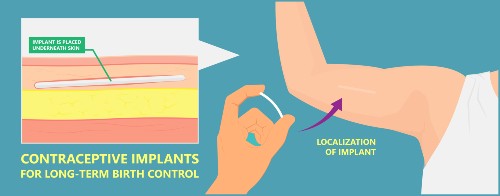
The contraceptive implant is inserted under the skin of the arm by a trained healthcare professional. It lasts for 3 years. You may be advised to replace it earlier if you are overweight.
How does it work?
It slowly releases, a hormone which works by:
• Preventing an egg from being released.
• Making the mucus at the entrance of the womb thicker, hence preventing the sperm from reaching the egg.
• Thinning the womb lining, hence reducing the chances of implantation of a fertilized egg.
If the implant is inserted within Days 1 to 5 of your period, it will have immediate contraceptive effect. If inserted on any other day of your period, the implant may not work immediately, and it is recommended to use an additional contraceptive method such as condoms for the first 7 days.
How effective is the implant?
It is over 99% effective if implanted correctly.
What are its advantages?
Some advantages of the contraceptive implant include:
• It works for 3 years, hence you do not need to think about contraception for that duration once it is inserted.

• It can be an option if you cannot use contraceptives that contain oestrogen.
• The implant can be removed anytime if you have side effects. Your fertility will return quickly.
• You can continue to use it until menopause.
• You can use it while breastfeeding.
What are the side effects?
The implant may cause your menstrual bleeding to be irregular, longer, lighter or heavier. Talk to your doctor if menstrual bleeding is heavy or prolonged. One out of five women will have no periods while on the implant (this is harmless). Other side effects include headaches, nausea, breast tenderness and pain, mood changes and acne, but these normally cease after the initial few months.

Is it suitable for me?
The contraceptive implant may not be suitable if you prefer to have regular periods, are at risk of osteoporosis, or have/have had certain medical conditions such as:
• Arterial disease
• Heart disease
• A blood clot in the blood vessel
• Liver disease
• Migraine
• Breast cancer
• Diabetes with complications
Check with your healthcare provider if a contraceptive implant is suitable for you.
Important: Inform your doctor or pharmacist of any illness or operations you have had, or have, or medications that you are taking.