Colchicine Dose for Gout: How Much, How Often & Maximum Per Day (0.5mg vs 0.6mg)
Colchicine is one of the most effective medicines for a gout flare, but it has a narrow safety margin. A little too much can cause severe diarrhoea, and a true overdose can be life-threatening. That is why the dose matters more than with most painkillers.
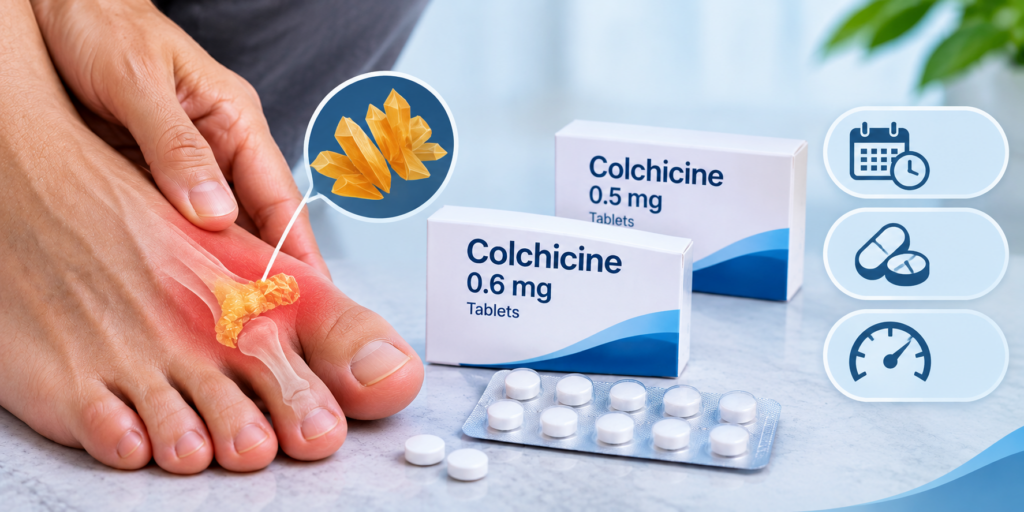
In Malaysia, colchicine tablets come in two strengths, 0.5 mg and 0.6 mg. Many dosing guides online are written for the US 0.6 mg tablet, which can confuse patients holding a 0.5 mg tablet from a local pharmacy or clinic. This guide explains the usual doses for each strength, the daily maximum, and who needs a lower dose.
Quick answer
- Gout flare (low-dose regimen): 1 mg (two 0.5 mg tablets) at the first sign of a flare, then 0.5 mg one hour later. With 0.6 mg tablets: 1.2 mg, then 0.6 mg one hour later. [VERIFY]
- Maximum on day 1 of a flare: about 1.5 mg (0.5 mg tablets) or 1.8 mg (0.6 mg tablets). Higher doses add side effects without better pain relief.
- Prevention when starting allopurinol or febuxostat: 0.5 mg or 0.6 mg once or twice a day, usually for 3 to 6 months.
- Start early: colchicine works best within 12 to 24 hours of flare onset.
Always take the dose your doctor or pharmacist prescribed. Never take extra tablets because the pain has not settled. Kidney or liver problems and many common medicines lower the safe dose.
What is colchicine and how does it work for gout?
Colchicine is an anti-inflammatory medicine that calms the immune reaction behind a gout attack. It does not lower uric acid and does not dissolve urate crystals.
Gout flares happen when uric acid crystals form in a joint, most often the big toe, ankle or knee. White blood cells rush in to attack the crystals, causing sudden pain, redness, heat and swelling. Colchicine blocks these white blood cells from moving and releasing inflammatory signals, which shortens the flare.
Doctors use colchicine in two ways:
- To treat a flare – a short course started as soon as symptoms begin.
- To prevent flares – a low daily dose taken while starting uric acid-lowering medicine such as allopurinol, which can trigger flares in the first few months.
In Malaysia, colchicine is a prescription-only medicine. It should be taken only after a doctor has confirmed gout and checked your kidney function and current medicines.
Colchicine 0.5 mg vs 0.6 mg: which do you have?
Check the strength printed on your box or pharmacy label before following any dosing guide. The same “two tablets” means 1 mg with one product and 1.2 mg with another.
| Brand (examples in Malaysia) | Strength per tablet | 2 tablets = | Common in |
|---|---|---|---|
| Dyna-Colchicine | 0.5 mg | 1.0 mg | Clinics, government hospitals, pharmacies |
| Goutnor | 0.5 mg | 1.0 mg | Clinics, pharmacies |
| Tolchicine | 0.6 mg | 1.2 mg | Clinics, pharmacies |
The 0.5 mg strength follows UK and European dosing, which the Malaysian gout guideline largely draws on. The 0.6 mg strength follows US dosing, which is what most American websites, such as Drugs.com and Mayo Clinic, describe.
The difference looks small, but colchicine toxicity depends on total dose. Following a US guide with a 0.5 mg tablet usually means a slightly lower dose. Following a UK guide with a 0.6 mg tablet means a higher dose than intended. If your label and an online guide disagree, follow your label and ask your pharmacist.
Colchicine dose for a gout flare
Current guidelines recommend a low-dose regimen: a total of about 1.5 to 1.8 mg on the first day. Studies found this relieves pain as well as older high-dose schedules, with far less diarrhoea.
| Timing | 0.5 mg tablets | 0.6 mg tablets |
|---|---|---|
| At first sign of flare | 1 mg (2 tablets) | 1.2 mg (2 tablets) |
| 1 hour later | 0.5 mg (1 tablet) | 0.6 mg (1 tablet) |
| Day 1 total | 1.5 mg | 1.8 mg |
| From day 2, if prescribed | 0.5 mg 2–3 times a day until the flare settles | 0.6 mg 1–2 times a day until the flare settles |
Key rules for flare dosing
- Start within 12 hours of symptoms if possible. Colchicine works less well once a flare has run for more than 36 hours.
- Stop once the flare settles, or straight away if you get diarrhoea, vomiting or stomach cramps.
- Do not take a second flare course within 3 days of the first unless your doctor tells you to.
- If you already take colchicine daily for prevention, ask your doctor how to adjust. US labelling advises waiting 12 hours after a flare dose before restarting the daily dose.
Colchicine is often combined with paracetamol or ice for pain. Some patients receive an NSAID (such as naproxen or etoricoxib) or a steroid instead of, or alongside, colchicine. Your doctor will choose based on your kidneys, stomach and heart.
Colchicine dose for preventing gout flares
For prevention, the usual dose is 0.5 mg (or 0.6 mg) once or twice a day, taken alongside uric acid-lowering medicine. The daily maximum for prevention is typically 1 mg (0.5 mg tablets) or 1.2 mg (0.6 mg tablets).
When you start allopurinol or febuxostat, uric acid levels fall and crystals in the joints begin to dissolve. This shifting can set off flares in the first months. A daily low dose of colchicine reduces that risk.
- How long: usually 3 to 6 months after starting uric acid-lowering treatment, or longer if flares continue. [VERIFY]
- Lower starting dose: older adults and people with reduced kidney function often start at 0.5 mg once a day or less.
- Do not stop allopurinol during a flare unless your doctor advises it. Stopping and restarting can make flares more frequent.
Colchicine alone is not a long-term gout treatment. Keeping uric acid below the target your doctor sets (often below 360 µmol/L) is what prevents flares over time.
Maximum colchicine dose per day
For most adults with normal kidneys, the maximum is about 1.5 mg (0.5 mg tablets) or 1.8 mg (0.6 mg tablets) on the first day of a flare, and 1 to 1.2 mg a day for prevention. Your own maximum may be lower.
| Use | Usual maximum, 0.5 mg tablets | Usual maximum, 0.6 mg tablets |
|---|---|---|
| Flare, day 1 | 1.5 mg | 1.8 mg |
| Flare, per course | 6 mg (UK guidance) [VERIFY] | Per doctor’s instructions |
| Prevention, per day | 1 mg | 1.2 mg |
Taking more does not make colchicine work faster. Older schedules that gave a tablet every hour until diarrhoea started are no longer recommended.
Signs you may have taken too much
- Severe or bloody diarrhoea, vomiting or stomach pain
- Muscle weakness or pain, numbness or tingling
- Unusual bruising, bleeding, fever or sore throat
- Passing very little urine
Symptoms of colchicine poisoning can start hours after the dose and get worse over days. There is no antidote. If you or someone else has taken more than prescribed, go to the nearest emergency department or call 999, even if you feel well. You can also contact the National Poison Centre (Pusat Racun Negara) at 1-800-88-8099.
Keep colchicine out of reach of children. A few tablets can be dangerous for a child.
Who needs a lower dose or should avoid colchicine?
Kidney function, liver function and other medicines are the main reasons a doctor lowers the colchicine dose or chooses another treatment. Colchicine is cleared through the liver and kidneys, so anything that slows its removal raises blood levels.
Health conditions
- Chronic kidney disease, including people on dialysis
- Liver disease
- Age over 70, or low body weight
- Existing blood disorders or nerve and muscle conditions
- Pregnancy or breastfeeding: discuss with your doctor first
Medicines that interact with colchicine
| Medicine group | Examples | Why it matters |
|---|---|---|
| Certain antibiotics | Clarithromycin, erythromycin | Sharply raise colchicine levels; combination can be fatal |
| Antifungals | Ketoconazole, itraconazole, fluconazole | Raise colchicine levels |
| HIV and hepatitis C medicines | Ritonavir and other boosted regimens | Raise colchicine levels |
| Transplant and immune medicines | Ciclosporin, tacrolimus | Raise colchicine levels |
| Heart and blood pressure medicines | Verapamil, diltiazem | Raise colchicine levels |
| Cholesterol medicines | Statins (e.g. atorvastatin, simvastatin), fenofibrate | Higher risk of muscle damage |
Grapefruit and grapefruit juice can also raise colchicine levels and are best avoided. Always tell your doctor and pharmacist about every medicine, supplement and herbal product you take, including those bought without a prescription.
Colchicine side effects
Diarrhoea is the most common side effect and the first sign that the dose is too high for you. At low doses, most people tolerate colchicine well.
Common
- Diarrhoea
- Nausea or vomiting
- Stomach pain or cramps
Rare but serious – stop and see a doctor promptly
- Muscle pain, weakness or dark urine
- Numbness or tingling in the hands or feet
- Fever, sore throat, mouth ulcers or frequent infections
- Unusual bruising or bleeding, or very pale skin
- Skin rash
These rare effects are more likely with long-term use, kidney problems or interacting medicines. Your doctor may order blood tests if you take colchicine for several months.
How to take colchicine safely
- With or without food: colchicine can be taken either way. Taking it after food may ease nausea.
- How fast it works: pain usually starts to ease within 12 to 24 hours, and most flares settle within a few days.
- Missed prevention dose: take it when you remember, unless it is nearly time for the next dose. Never take two doses at once to make up.
- Keep a flare supply only if your doctor agrees: some patients are given a “pill-in-the-pocket” supply with clear written instructions.
- Alcohol: heavy drinking raises uric acid and can trigger flares. Limit alcohol, especially beer and spirits, while managing gout.
- Do not share your tablets: a safe dose for you can be dangerous for someone with kidney disease or on other medicines.
Get the right colchicine dose from a doctor online
The safest colchicine dose depends on your kidneys, your other medicines and whether you need treatment or prevention. A doctor can work this out with you in one consultation.
With DoctorOnCall, you can speak to a licensed Malaysian doctor by video or chat about your gout symptoms. The doctor can review your history and medicines, advise on flare treatment and long-term uric acid control, and issue a prescription if suitable. Prescribed medicines can be delivered to your door from the DoctorOnCall pharmacy.
If you have a hot, swollen joint with fever, or you cannot put weight on it, seek in-person care urgently. These can be signs of a joint infection rather than gout.
Frequently asked questions
How many colchicine 0.5 mg tablets can I take in a day?
For a flare, the usual first-day total is three 0.5 mg tablets (1.5 mg): two at the start and one an hour later. For prevention, it is usually one or two tablets a day. Follow your prescription, as your limit may be lower.
What is the difference between colchicine 0.5 mg and 0.6 mg?
Only the amount of colchicine per tablet. 0.5 mg tablets follow UK and European dosing, while 0.6 mg tablets follow US dosing. Check your label so you count the dose correctly.
Can I take colchicine every day?
Yes, if your doctor prescribes it for prevention, usually at 0.5 to 0.6 mg once or twice a day. Long-term use needs regular review, especially of kidney function.
How long does colchicine take to work for gout?
Most people notice less pain within 12 to 24 hours. It works best when started within 12 hours of the flare beginning.
Can I take colchicine with painkillers?
Paracetamol is generally fine alongside colchicine. Combining with an NSAID or steroid should only be done on a doctor’s advice.
Is colchicine safe for the kidneys?
Colchicine does not usually damage the kidneys, but weak kidneys clear it more slowly, which raises the risk of side effects. People with kidney disease usually need a lower dose.
Can I buy colchicine without a prescription in Malaysia?
No. Colchicine is a prescription medicine in Malaysia. You can get a prescription through an in-person or online doctor consultation.