

What Is The National Immunisation Schedule?
Children are a special gift for every couple. A parent’s instinct to protect a child begins when they are born into the world. Similarly, the governments that exist in this world want to protect the people in the best way possible. Fortunately for us Malaysians, our government provides a range of free vaccine injections since the day we were born, regardless of income.
The National Immunisation Schedule was introduced in the 1950s and allows every baby born in Malaysia to get free vaccinations to prevent several infectious diseases. The Vaccination Malaysia Schedule was based on the Development Program for Immunization Program (EPI-Expanded Immunization Program), designed by the World Health Organization (WHO). According to the program, each country is recommended to offer immunization for 6 main types of childhood infections. In Malaysia, the government has increased immunization coverage to 12 major childhood infections.
Vaccines provide immunizations that are important to protect us from dangerous and potentially harmful diseases that can cause major disability of the baby or even death.
A report from WHO stated that two to three million deaths from infections such as measles, diphtheria, tetanus, and influenza have been successfully prevented. This proves that vaccination is a successful method for public health and should be taken seriously.
Following the Immunisation Schedule
As a parent, you should pay close attention to your baby’s immunisation schedule. Bringing your baby to their vaccination appointment is important to ensure your child’s well-being. The latest National Immunization Schedule is as follows:
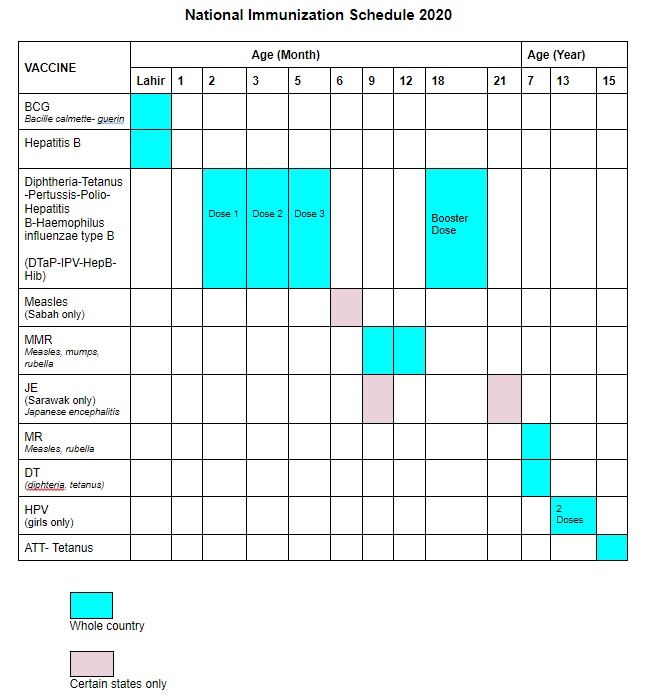
Different from the baby immunization schedule 2019, baby immunization 2020 has included the pneumococcal vaccine injection. The government has agreed to allocate a sum of RM60 million to introduce the injection of pneumococcal vaccine into the 2020 immunisation schedule. This injection will be given to all babies, starting in January 2020 during their 4th, 6th, and 15th months. Think you know about vaccines? Take this quiz to find out.
List of Protected Diseases

To find out more about the disease covered by the baby’s immunization injection above, see the following schedule.
|
Disease
|
Vaccine
|
Injection Method
|
Vaccine Side Effects
|
|---|---|---|---|
| TBSymptoms of persistent cough and bloody cough are caused by mycobacterium tuberculosis. This bacterial disease infects the lungs and causes inflammation. TB is highly contagious. | BCG | Injection under the outer layer of skin (into the dermis layer) at the shoulder | Usually only swelling and ulcers at the site of injection for a few days.Serious side effects such as lymph node inflammation and lupus vulgaris are rarely reported. |
| Hepatitis BHepatitis B virus infection causes inflammation and chronic liver damage. The virus is spread through sexual intercourse, exchanging needles among drug addicts, and also from pregnant mothers to her child. | Hepatitis B | Thigh injections | Pain at the injection siteFeverAllergic reactions, but very rare |
| Diphtheria Bacterial Infections corynebacterium diphtheriae on the throat causing airway obstruction. | Combination of Diphtheria-tetanus- pertussis (DTap) | Injections in thighs for children under 1 year and shoulders for those over 1 year | Pain, redness and swelling at the injection siteFeverHeadacheNausea and vomitingDiarrhoea and abdominal pain |
| Tetanus Clostridium tetani bacteria infection causes muscle stiffness due to the toxin that affects the brain and nervous system. | Combination Diphtheria-tetanus- pertussis (DTap) | Injections in the thighs of children under 1 year and in the shoulders for those over 1 year | Pain, redness and swelling at the injection siteFeverHeadacheNausea and vomitingDiarrhoea and abdominal pain |
| Pertussis (whooping cough)Bordetella pertussis infection is very contagious. The infection causes a persistent cough which creates difficulty in breathing. | Combination Diphtheria-tetanus- pertussis (DTap) | Injections in thighs for children under 1 year and on the shoulders for them to over 1 year | Pain, redness and swelling at the injection siteFeverHeadacheNausea and vomitingDiarrhoea and abdominal pain |
| Haemophilus influenzae type BInfection in the lungs (pneumonia) & membrane inflammation in the brain (meningitis) caused by Haemophilus influenza B type bacteria | Hib(Haemophilus influenzae type B) | Injections in thighs for children under 1 year and in shoulders for those over 1 year | Pain, redness and swelling at the injection siteFever |
| PolioPoliovirus causes permanent defects in muscles, namely paralysis due to infection in the brain. | Polio (IPV) | Thigh injection for children under 1 year and on the shoulders for those over 1 year old | Pain, redness and swelling at the injection siteFever |
| MeaslesAcute infection of the Rubeola virus causes rashes and fever. This virus can also infect the brain and lungs. | Combination of Measles-Mumps-Rubella (MMR) | Injection in thigh muscle | Pain, redness and swelling at the injection siteFeverSwelling in the cheek and neck glandsMore serious reactions such as seizures, muscle cramps, lung infections- lungs, and rare platelet cell deficiencyIllness can occur if a person has low immunity problems |
| MumpsA viral infection that causes swelling in the parotid glands. The infection can spread to other organs such as the testicles and brain. | Measles-Mumps-Rubella Vaccine Combination (MMR) | Injection in thigh muscles | Pain, redness and swelling at the injection siteFeverSwelling in the cheek and neck glandsMore serious reactions such as seizures, muscle cramps, lung infections -lungs, and platelet cell deficiency are rareIllness can occur if a person has low immunity problems |
| RubellaHighly contagious viral infection that usually gives red rashes to the baby especially those born from infected mother. | Measles-Mumps-Rubella (MMR) Vaccine Combination | Injection in thigh muscles | Pain, redness and swelling at the injection siteFeverSwelling in the cheek and neck glandsMore serious reactions such as seizures, muscle spasms, lung infections, and platelet cell deficiency are rareThe disease can occur if a person has low immunity |
| Cervical cancerCancer is caused by Human papillomavirus (HPV)specifically types 16 and 18. | HPV | Injection in the thigh or shoulder muscles | Pain, redness and swelling at the injection siteFever |
| Japanese encephalitisViral infection spread by mosquito bites can damage the brain. | JE | Injection in thigh or shoulder muscles | Pain, redness and swelling at the injection siteFever |
| PneumococcalBacterial infection caused by streptococcus pneumonia usually spreads through respiratory droplets. Can affect lungs, brains and bloodstream infections. | Pneumococcal | Injection in thigh or shoulder muscles | Pain, redness and swelling at the injection siteFeverHeadache |
Additional Vaccines
Apart from the vaccines listed in the schedule above, there are additional vaccines that are optional. Parents can get these vaccines for their children from private hospitals or clinics.
1. Meningococcal
Meningitis, which is the inflammation of the brain lining caused by the bacteria Neisseria meningitides, is an infection that can be fatal if not treated. The vaccine is recommended to be taken by all ages of groups as early as 11 years old for the first dose. It is also routinely given to those with certain medical conditions that weaken their immune system.
2. Rotavirus
Most of the children admitted to the ward with diarrhoea and vomiting were diagnosed with rotavirus infection. This vaccine can be taken as early as 6 weeks of age and should be completed in two doses. This vaccine is different from other vaccines as it is taken orally and not by injection.
3. Chicken Pox
It is different from measles but commonly confused as the same illness. Chickenpox is an infection caused by varicella-zoster virus infection. The hallmark of this infection is characterised by itchy skin rash in a form of blisters which eventually dry. This infection is highly contagious.
4. Influenza
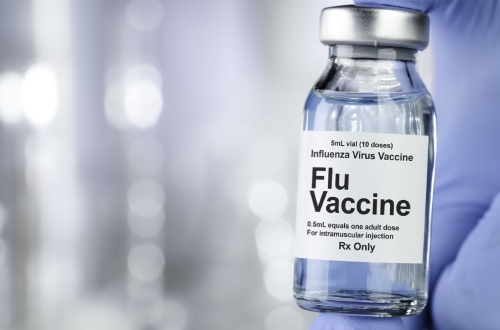
Annual influenza injections can prevent various types of influenza that usually cause severe fever, colds and coughs. Everyone, especially children, the elderly and healthcare workers are all recommended to get vaccinated annually to ensure that they are protected from the influenza virus as it can mutate very quickly. Consult a doctor for more information on vaccines.