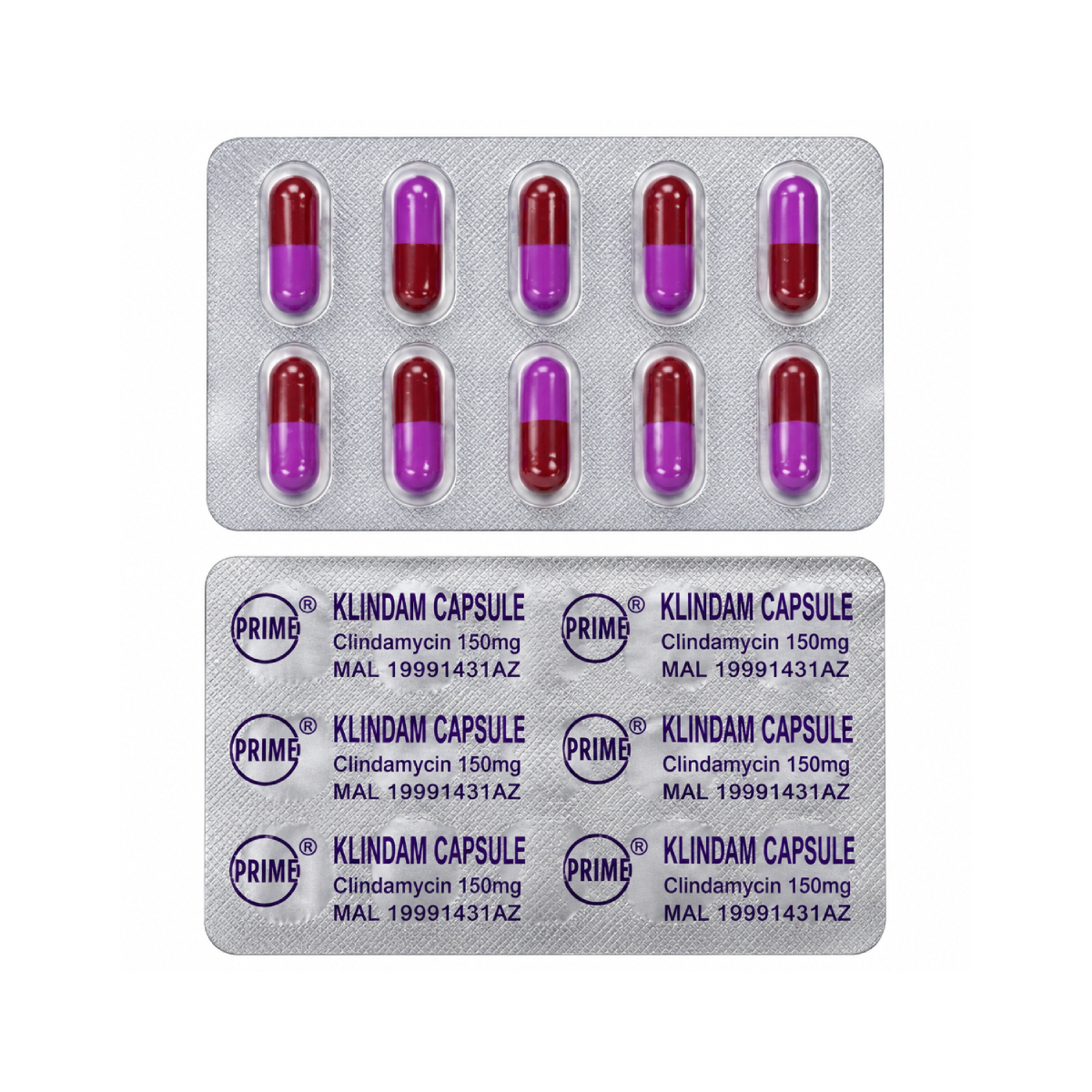
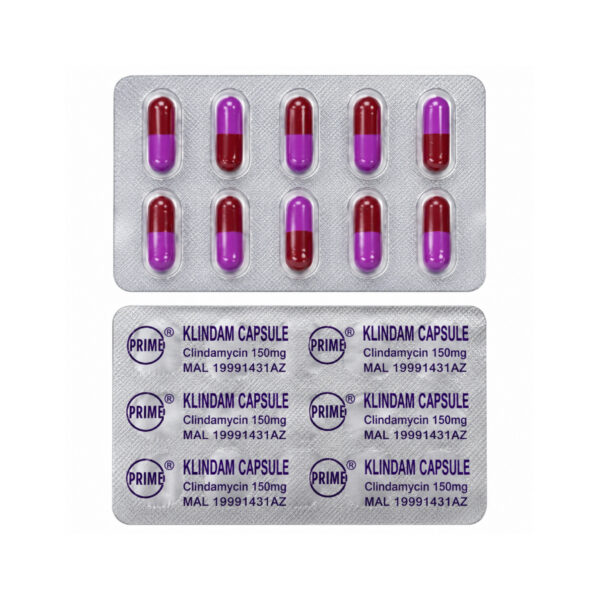
Klindam 150mg Capsule

Brand Prime
  • Fast Delivery
  • Muslim-Friendly
  • FDA Approved
  • Secure Payment
Save: RM3.75   20% OFF
Earn 15 Points on this item (Log in or register to earn upon delivery)
🎟️ Available Vouchers
NOV21
RM21 OFF
Min Spend RM550.00
Valid till: 23 Nov 2026
NOV14
RM14 OFF
Min Spend RM380.00
Valid till: 23 Nov 2026
NOV7
RM7 OFF
Min Spend RM200.00
Valid till: 23 Nov 2026
DELIVERY5
RM5 OFF
Min Spend RM120.00

Click a voucher to copy the code. Automatically applied at checkout if conditions are met.

Have questions? Chat with us on WhatsApp
Dr. Mohd Izzat Amir Bin Awang
Reviewed byDr. Mohd Izzat Amir Bin AwangDoctor of Medicine (MD), University of Mansoura - Manchester

Dr. Adeline Carol Peters
Written byDr. Adeline Carol PetersBachelor of Medicine and Bachelor of Surgery (MBBS) — Manipal Academy of Higher Education (MAHE)

Last updated:

Overview

Klindam 150mg Capsule contains clindamycin (as clindamycin hydrochloride) 150mg, a lincosamide antibiotic marketed under the Prime brand. It is prescribed for bacterial infections caused by susceptible organisms, such as infections of the skin and soft tissues, the respiratory tract, bones and joints, teeth and gums, and certain abdominal and gynaecological infections. As a prescription antibiotic it is supplied on a doctor’s advice, and it only works against bacteria, not viral illnesses such as colds or influenza.

Clindamycin attaches to the bacterial ribosome and stops bacteria from making the proteins they need to grow and multiply, which gives the body’s immune system the chance to clear the infection. It is particularly active against many Gram-positive bacteria such as Staphylococcus and Streptococcus species and against several anaerobic bacteria, so doctors often choose it for deep-seated or anaerobic infections and for patients who cannot take penicillin. The 150mg capsule strength allows the doctor to adjust the total daily dose to the type and severity of the infection.

Directions for Use

Swallow the capsule whole with a full glass of water (about 200ml) while sitting or standing upright, and avoid lying down for at least 30 minutes afterwards to help prevent irritation of the food pipe. It can be taken with or without food, and taking it with a meal may help if it upsets your stomach. Space your doses evenly through the day, take them at the same times each day, and complete the full course prescribed even if you feel better, unless your doctor tells you to stop.

Dosage

This is a prescription medicine and the dose is set by your doctor. For adults, oral clindamycin is usually given as 150mg to 300mg every 6 hours for mild to moderate infections, increasing to 300mg to 450mg every 6 hours for more severe infections. For children able to swallow capsules, the dose is calculated by body weight and divided into 3 to 4 doses a day. Your doctor will decide the exact dose and length of treatment based on the type and severity of the infection, your liver and kidney function and any other medicines you take, so always follow the instructions on your prescription label.

Storage Instructions

Store below 30°C in a dry place, away from direct sunlight and out of reach of children. Keep the capsules in their original packaging until you are ready to take them.

Side Effects

  • Common: diarrhoea, nausea, vomiting, and stomach pain or cramps
  • Common: skin rash or itching, and an altered or unpleasant taste in the mouth
  • Irritation of the food pipe with pain on swallowing, especially if the capsule is taken without enough water or just before lying down
  • Vaginal or oral thrush (candidiasis), because clindamycin can disturb the body’s normal bacteria
  • Serious, seek medical help immediately: severe, persistent watery or bloody diarrhoea (possible Clostridioides difficile colitis, which can occur during treatment or weeks after stopping), severe allergic reactions such as swelling of the face, lips or throat and difficulty breathing, severe blistering skin reactions, or yellowing of the skin or eyes

Contraindications

  • Known allergy (hypersensitivity) to clindamycin, lincomycin or any other ingredient of the capsule
  • A history of antibiotic-associated colitis, or of inflammatory bowel disease such as Crohn’s disease or ulcerative colitis, calls for great caution and should be discussed with your doctor before use
  • Severe liver disease or significant kidney impairment may need dose adjustment and monitoring by your doctor
  • Pregnancy and breastfeeding: clindamycin crosses the placenta and passes into breast milk, so it should only be used if your doctor decides it is clearly needed, and a breastfed baby who develops diarrhoea or blood in the stools should be seen by a doctor
  • Not suitable for treating meningitis, as clindamycin does not reach adequate levels in the cerebrospinal fluid

Drug / Food Interactions

  • Neuromuscular blocking agents (muscle relaxants used in anaesthesia): clindamycin can enhance their effect, so tell your anaesthetist, surgeon or dentist that you are taking it before any procedure
  • Erythromycin and some other macrolide antibiotics: they act on the same site on the bacterial ribosome and may antagonise clindamycin, so they are usually not combined
  • Anti-diarrhoea medicines such as loperamide or diphenoxylate: they can worsen or mask antibiotic-associated colitis and should be avoided unless your doctor advises otherwise
  • Rifampicin and other strong CYP3A4 inducers may lower clindamycin levels, while strong CYP3A4 inhibitors such as ketoconazole, itraconazole or ritonavir may raise them; warfarin users may also need closer INR monitoring
  • Food does not significantly affect absorption, so it can be taken with meals; inform your doctor and pharmacist of all medicines, including over-the-counter products and supplements, that you are taking

Quick Tips

  • Take each capsule with a full glass of water and stay upright for at least 30 minutes to protect your food pipe
  • Finish the full course your doctor prescribed and never save leftover capsules or share them with others
  • If you develop severe, watery or bloody diarrhoea, even weeks after finishing the course, contact your doctor straight away and do not self-treat with anti-diarrhoea medicine
  • Tell any doctor, dentist or anaesthetist that you are taking clindamycin before a procedure, and keep doses evenly spaced through the day

Ingredients / Active Ingredients

  • Clindamycin 150mg (as clindamycin hydrochloride) per capsule

Safety Advice

Pregnancy

Safe If Prescribed

This medicine should only be used during pregnancy if prescribed by a doctor after careful evaluation.

Breastfeeding

Use With Care

Use with caution. Monitor infant for potential adverse reactions.

Kidney

Use With Care

Use cautiously. Dose adjustment or monitoring may be required.

Liver

Use With Care

Use cautiously. Liver function monitoring may be required.

Alcohol

Not Advisable

It is not advisable to consume alcohol while taking this medicine.

Driving

Generally Safe

This medicine is generally safe and should not impair your driving ability.

Frequently Asked Questions

Product Specifications

BrandPrime
ClassificationNon-prescription
Ingredients / Active IngredientsClindamycin
Pack Size10s
Shelf LifeRefer to the expiry date printed on the packaging. Do not use the capsules after the expiry date.

Customer Reviews

Be the first to review this product.

Confirm Action
×

Are you sure?

×
×

Pharmacist Screening

×

What condition or symptom are you treating with this medication?

*Please select the closest match. A pharmacist may call to verify your selection before dispensing.

Important Medical Information

💊 Recommended Dosage:

This is a prescription medicine and the dose is set by your doctor. For adults, oral clindamycin is usually given as 150mg to 300mg every 6 hours for mild to moderate infections, increasing to 300mg to 450mg every 6 hours for more severe infections. For children able to swallow capsules, the dose is calculated by body weight and divided into 3 to 4 doses a day. Your doctor will decide the exact dose and length of treatment based on the type and severity of the infection, your liver and kidney function and any other medicines you take, so always follow the instructions on your prescription label.

🛑 Contraindications (Do not use if):
  • Known allergy (hypersensitivity) to clindamycin, lincomycin or any other ingredient of the capsule
  • A history of antibiotic-associated colitis, or of inflammatory bowel disease such as Crohn’s disease or ulcerative colitis, calls for great caution and should be discussed with your doctor before use
  • Severe liver disease or significant kidney impairment may need dose adjustment and monitoring by your doctor
  • Pregnancy and breastfeeding: clindamycin crosses the placenta and passes into breast milk, so it should only be used if your doctor decides it is clearly needed, and a breastfed baby who develops diarrhoea or blood in the stools should be seen by a doctor
  • Not suitable for treating meningitis, as clindamycin does not reach adequate levels in the cerebrospinal fluid
If you are unsure, please chat with us or consult your doctor.
⚠️ Common Side Effects:
  • Nausea or vomiting
  • Diarrhoea
  • Abdominal pain
  • Rash or itching
  • Metallic taste in the mouth
  • In rare cases, severe intestinal condition (Clostridium difficile infection)
Stop taking this medication immediately and consult your doctor if you experience severe allergic reactions or side effects.
IMPORTANT: Unsure? Chat with our pharmacists (Mon - Sat, 9:00am - 6:00pm) before buying.