Eczema Cream in Malaysia: When Xepacort (Hydrocortisone) Helps – Face, Baby & Body
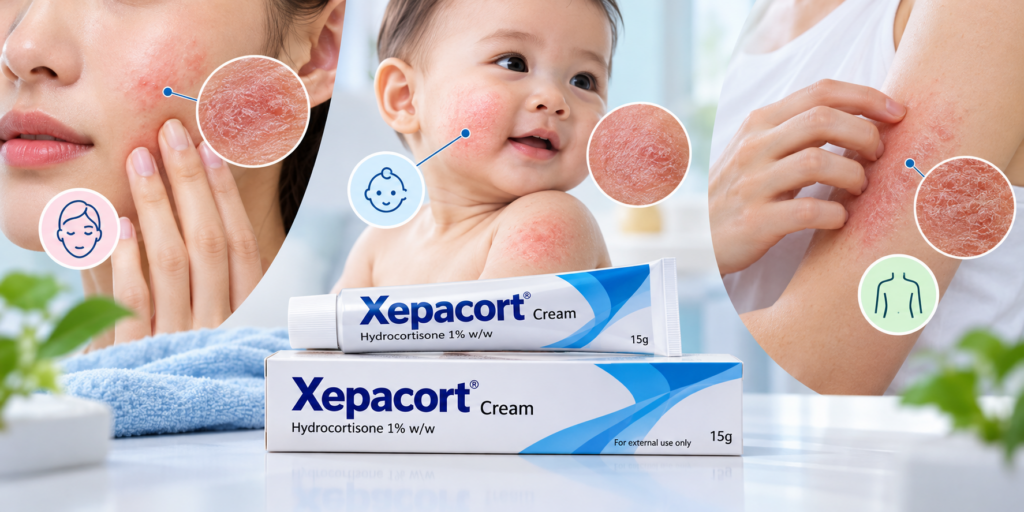
The right eczema cream depends on what your skin is doing today. A fragrance-free moisturiser is the daily foundation for every type of eczema. When skin turns red, inflamed and intensely itchy despite moisturising, a short course of a mild steroid such as hydrocortisone 1% (Xepacort) is often the next step.
Most eczema cream advice in Malaysia stops at moisturiser recommendations. This guide covers the step most people are unsure about: when hydrocortisone is appropriate, how to use it on the face, body and in children, and when a doctor should take over.
Why moisturiser comes first
Eczema (atopic dermatitis) is a weakened skin barrier that loses water and lets irritants in. The result is dry, itchy skin that flares in cycles. In Malaysia, heat, sweat, humidity, harsh soaps and long hot showers are common triggers.
A moisturiser, also called an emollient, repairs that barrier. It does not reduce active inflammation, but used daily it lowers how often flares happen and how severe they get.
How to get the most from it:
- Apply generously at least twice a day, and within three minutes of bathing while skin is still damp.
- Choose fragrance-free products. Ointments are the most protective, creams suit daytime, and lotions are lightest but least effective for very dry skin.
- Keep moisturising during and after a flare, not only when skin looks dry.
- Replace regular soap with a soap-free wash or emollient cleanser.
When hydrocortisone 1% is the right step
Hydrocortisone 1% is the mildest strength of topical corticosteroid. It calms inflammation, redness and itch during a flare, which moisturiser alone cannot do. Xepacort Cream contains hydrocortisone 1%.
It is usually appropriate when all of the following apply:
- The patch is red, inflamed and itchy, not just dry or rough.
- Moisturising regularly for several days has not settled it.
- The flare is small to moderate in size, not widespread.
- The skin is unbroken, with no weeping, crusting or pus.
- The area has previously been confirmed as eczema by a doctor, or a pharmacist has assessed it.
Hydrocortisone is a short-term flare treatment, not a daily cream. Once the flare settles, return to moisturiser alone.
Do not use it on skin that may be infected, on fungal rashes such as ringworm or tinea, on acne, rosacea or cold sores, or in or around the eyes. A steroid can make these conditions worse.
Moisturiser vs hydrocortisone: which do you need
Most people with Eczema need both, used for different jobs.
| Moisturiser (emollient) | Hydrocortisone 1% (e.g. Xepacort) | |
|---|---|---|
| What it does | Repairs and protects the skin barrier | Reduces inflammation, redness and itch |
| When to use | Every day, flare or no flare | During a flare only |
| How long | Ongoing | Short course, usually up to 7 days without medical advice |
| How much | Generously | A thin layer on affected skin only |
| Face | Yes | Short courses, with pharmacist or doctor advice |
| Babies and children | Yes, from birth | On a doctor’s advice |
| Broken or infected skin | Gentle use only | No |
How to use Xepacort correctly
Used thinly, briefly and only where needed, hydrocortisone 1% has a low risk of side effects. Always follow the pack leaflet or your pharmacist’s instructions.
- Wash and dry your hands, then the affected area.
- Squeeze a line of cream from your fingertip to the first finger crease. This fingertip unit covers an area about the size of two adult palms.
- Spread a thin layer over the inflamed patch only, once or twice a day.
- Wait about 20 to 30 minutes before applying moisturiser on the same area, so the two do not dilute each other. Moisturise all other dry skin as usual.
- Stop once the skin has settled. If there is no clear improvement after 7 days, stop and speak to a doctor.
Avoid covering treated skin with tight dressings or plastic unless a doctor advises it, as this increases how much steroid is absorbed.
Can you use hydrocortisone on the face
Yes, for short periods and with professional advice first. Facial skin is thinner and absorbs steroids more readily, so doctors choose the mildest strength, hydrocortisone 1%, when the face needs one.
- Confirm it is eczema. Facial rashes are often rosacea, acne, perioral dermatitis or a fungal infection, and a steroid can worsen all of these.
- Keep courses short, typically a few days, and stop as soon as the redness settles.
- Keep it away from the eyes and eyelids unless a doctor specifically advises it.
- Never use a stronger steroid cream on the face unless it is prescribed for that purpose.
Long-term facial steroid use can cause skin thinning, visible blood vessels and a rebound rash when stopped. If facial eczema keeps returning, a doctor can discuss steroid-free alternatives.
Is hydrocortisone safe for babies and children
Hydrocortisone 1% is one of the steroids doctors most often prescribe for baby and child eczema, but it should be started on a doctor’s advice, not self-selected. A baby’s skin absorbs more medicine relative to body size, and infant rashes have many causes besides eczema.
For babies and young children:
- Moisturise from head to toe at least twice a day with a fragrance-free emollient. This is the main treatment.
- See a doctor before using any steroid cream, and follow the exact area, amount and number of days they give.
- Do not use it in the nappy area unless a doctor advises it. The nappy acts like a cover and increases absorption.
- Use a fingertip unit as a guide and apply a thin layer only.
Used as directed, mild steroids are safe and effective for children. Under-treating a flare out of worry often leads to more itching, broken skin and infection. If you are concerned, ask the doctor to explain the plan rather than stopping on your own.
Body, hands and skin folds
On the body, hydrocortisone 1% suits mild flares on the arms, legs, inner elbows, behind the knees and the neck. How well it works depends on skin thickness.
| Area | What to expect |
|---|---|
| Inner elbows, behind knees, neck | Usually responds well to a short course |
| Armpits, groin, under the breasts | Thin skin that absorbs more. Use briefly, and check for fungal infection first, as these warm, sweaty folds are prone to it in Malaysia’s climate |
| Hands and feet | Thick skin, so a mild steroid may not be strong enough. See a doctor if there is no improvement in 7 days |
| Large areas of the body | Not for self-treatment. See a doctor |
For hand eczema, reapply moisturiser after every hand wash and wear gloves for wet work and cleaning products.
When to see a doctor
See a doctor rather than self-treating if any of the following apply:
- No clear improvement after 7 days of hydrocortisone 1%.
- The rash is spreading or covers a large area.
- The skin is weeping, crusting, oozing yellow fluid or very painful, which can signal infection.
- Your baby is under one year old, or this is a child’s first rash.
- Flares return within weeks of stopping treatment.
- Itching is disturbing sleep, work or school.
- You are unsure whether the rash is eczema.
Seek urgent care the same day for painful clusters of blisters or small punched-out sores on eczema skin, especially with fever. This can be eczema herpeticum, a viral infection that needs prompt treatment.
A doctor can confirm the diagnosis, prescribe a stronger or steroid-free treatment where needed, and give you a written flare plan.
Frequently asked questions
What is the best eczema cream in Malaysia?
There is no single best cream. A fragrance-free moisturiser suits daily care for everyone, and a mild steroid such as hydrocortisone 1% suits short-term flare control. The best choice depends on the flare, the area and the person’s age.
Is Xepacort a steroid?
Yes. Xepacort contains hydrocortisone 1%, the mildest strength of topical corticosteroid.
Can I use Xepacort on my face?
Only for a few days at a time, away from the eyes, and after a pharmacist or doctor has confirmed the rash is eczema.
Can I use Xepacort on my baby?
Speak to a doctor first. Hydrocortisone 1% is commonly prescribed for infant eczema, but the area, amount and duration should be set by a doctor.
How long can I use hydrocortisone cream?
Without medical advice, generally up to 7 days. Stop sooner if the skin clears, and see a doctor if it has not improved.
Should I apply moisturiser or hydrocortisone first?
Either order works. Leave about 20 to 30 minutes between them on the same area.
Does hydrocortisone cure eczema?
No. It controls flares. Daily moisturising and avoiding triggers are what keep eczema under control over time.
Manage eczema with DoctorOnCall
Effective eczema care has two parts: a moisturiser every day and the right flare treatment when skin becomes inflamed.
- Daily barrier care: browse fragrance-free emollients and soap-free washes in the DOC eczema and dry skin range.
- Flare control: Xepacort Cream (hydrocortisone 1%) is available from DoctorOnCall’s online pharmacy, with pharmacist guidance on safe use.
- Not sure it is eczema, or treating a baby or the face? Consult a doctor online for a diagnosis and a treatment plan, with medicines delivered to your door.