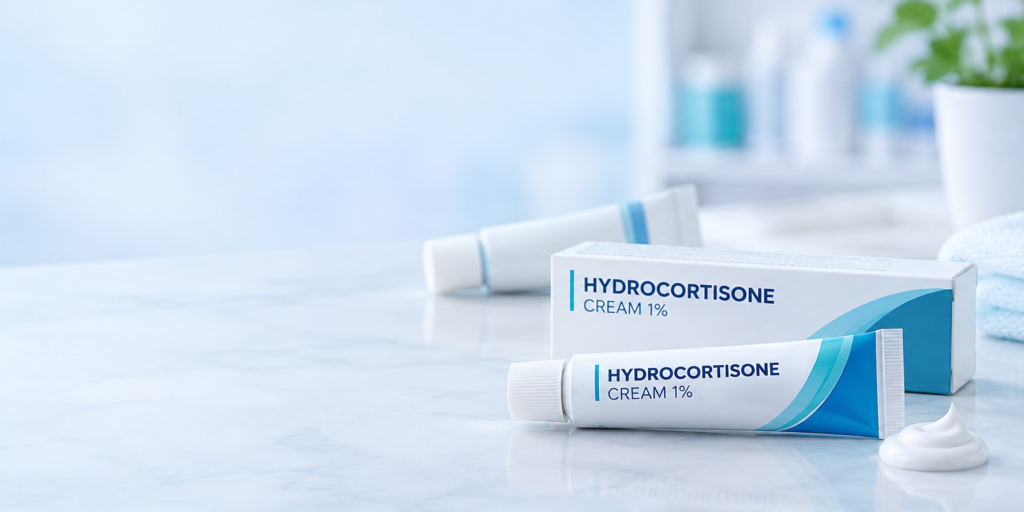
Hydrocortisone 1% Cream in Malaysia: Uses, How Strong It Is & Xepacort vs Other Brands
Hydrocortisone 1% cream: the short answer
Hydrocortisone 1% cream is the mildest class of topical steroid. It calms red, itchy, inflamed skin caused by mild eczema, contact dermatitis and insect bites.
It works best as a short course: a thin layer once or twice a day for up to 7 days. It does not treat skin infections, acne or the underlying cause of eczema.
In Malaysia, it is sold under several brands, including Xepacort 1% cream. This guide covers what it treats, how strong it really is, where not to use it, and how the local brands compare.
What is hydrocortisone 1% cream?
Hydrocortisone is a corticosteroid, a synthetic version of cortisol, a hormone the body makes naturally. “1%” means each gram of cream contains 10 mg of hydrocortisone.
Applied to the skin, it reduces the immune reaction that causes inflammation. Blood vessels narrow, swelling goes down, and the signals that drive redness and itch are dampened.
It comes as a cream for moist or weeping skin and as an ointment for dry, thickened skin. Both carry the same strength.
Is hydrocortisone a strong steroid?
No. Hydrocortisone 1% sits in the lowest of the four potency classes used by doctors and pharmacists. Stronger steroids are reserved for thicker skin and more severe flares, usually on prescription.
| Potency class | Example ingredients | Typical use |
|---|---|---|
| Mild | Hydrocortisone 0.5–1% | Mild eczema, insect bites, short courses; thin skin under medical advice |
| Moderate | Clobetasone butyrate 0.05% | Flares that do not settle on a mild steroid |
| Potent | Betamethasone valerate 0.1%, mometasone furoate 0.1% | Moderate to severe eczema and psoriasis on the body |
| Very potent | Clobetasol propionate 0.05% | Severe, stubborn patches; short courses under a doctor |
Because it is mild, hydrocortisone 1% has a lower risk of side effects than stronger steroids. That does not make it suitable for every rash, or for long-term daily use.
What is hydrocortisone cream used for?
Hydrocortisone 1% cream is used for mild, non-infected skin inflammation that causes redness and itch.
- Mild eczema (atopic dermatitis): dry, itchy patches on the arms, legs or body.
- Contact dermatitis: reactions to soaps, detergents, metals such as nickel, or plants.
- Insect bites and stings: mosquito, sandfly and ant bites that stay swollen and itchy.
- Heat rash irritation: itch from prickly heat once the skin is cool and dry.
- Mild allergic skin reactions: localised itch and redness without blistering or spreading.
It is not a treatment for fungal rashes such as ringworm or jock itch, bacterial infections, cold sores, chickenpox, acne or dandruff. Using it on these can make them worse.
Does hydrocortisone heal or just stop itching?
It does more than stop itching, but it does not cure the cause. Hydrocortisone treats the inflammation itself, which is why redness and swelling settle along with the itch.
Calming the itch also breaks the itch–scratch cycle. Less scratching gives damaged skin the chance to repair, so a flare often clears within a few days.
What it cannot do is remove the trigger. Eczema can return, and an allergen or irritant will cause a new reaction on the next contact. Daily moisturising and avoiding known triggers do the long-term work.
How to apply hydrocortisone 1% cream
Follow the product leaflet or your pharmacist’s directions. The general approach is:
- Wash and dry your hands and the affected skin.
- Squeeze out a small amount. One fingertip unit, a line of cream from the tip to the first crease of an adult finger, covers an area the size of two adult palms.
- Spread a thin layer over the affected area only, and rub in gently.
- Apply once or twice a day. More often does not work better.
- Wash your hands afterwards, unless you are treating your hands.
- If you also use a moisturiser, apply it first and wait about 30 minutes before the cream.
Without a doctor’s advice, stop after 7 days. If the skin has not improved, or gets worse, speak to a pharmacist or doctor.
Where should you not apply hydrocortisone?
Do not apply hydrocortisone 1% cream to these areas without a doctor’s advice:
- Eyes and eyelids: steroid near the eye can raise eye pressure.
- Face: facial skin is thin and prone to thinning, acne-like rashes and rosacea flares.
- Groin, genitals and around the anus: thin skin absorbs more steroid.
- Broken, cut or infected skin: including weeping, crusted or pus-filled areas.
- Under nappies or tight dressings: covering the skin increases absorption.
Check with a doctor or pharmacist first if you are pregnant or breastfeeding, or if the cream is for a child under 10.
Side effects
Used as directed for a short course, side effects are uncommon. The most likely is brief stinging or burning when the cream first goes on.
Longer or heavier use than recommended raises the risk of:
- Thinning of the skin, which may bruise or tear easily
- Stretch marks or visible small blood vessels
- Lighter or darker patches of skin
- Worsening of an untreated fungal or bacterial infection
Stop using the cream and seek advice if the rash spreads, blisters, oozes or does not improve within 7 days.
Xepacort vs other hydrocortisone creams in Malaysia
All plain hydrocortisone 1% creams contain the same active ingredient at the same strength. The differences are the base, the pack size and the price, not how well they work.
Combination creams are a different category. They add an antifungal or antibiotic and are meant for inflamed skin that is also infected, usually after a doctor’s assessment.
| Product | Active ingredients | Type | Pack size | DOC price (RM) |
|---|---|---|---|---|
| Xepacort 1% cream (Xepa-Soul Pattinson) | Hydrocortisone 1% | Plain mild steroid | XX |
Which to choose: for a simple itchy rash or bite, any plain hydrocortisone 1% cream is suitable, so choose on price and pack size. If the rash may be fungal or infected, do not self-treat with a combination cream; ask a pharmacist or doctor first.
Production note: fill brands and prices from the live DOC catalogue on the publish date, and confirm Daktacort and Fucidin H are stocked before keeping those rows.
When to see a doctor
Speak to a doctor rather than continuing to self-treat if:
- The rash has not improved after 7 days of use
- It is spreading, blistering, oozing, crusting or painful
- You have a fever or feel unwell alongside the rash
- The rash is on the face, eyes or genitals
- The rash keeps coming back after each course
- The cream is for a baby or young child
Not sure if hydrocortisone is right for your rash? Consult a DoctorOnCall doctor online, share a photo of the affected skin, and get treatment delivered to your door.
Already know what you need? Order Xepacort 1% cream from the DoctorOnCall pharmacy.
Frequently asked questions
Is hydrocortisone a strong steroid?
No. Hydrocortisone 1% is in the mild class, the lowest of the four potency levels. It is used for mild inflammation and short courses.
Where should you not apply hydrocortisone?
Avoid the eyes, face, groin and genitals, and broken or infected skin, unless a doctor advises otherwise. Do not cover treated skin with tight dressings or nappies.
Does hydrocortisone heal or just stop itching?
It reduces the inflammation behind the itch, so redness and swelling improve too. It does not cure eczema or remove the trigger, so flares can return.
How long can I use hydrocortisone 1% cream?
Without medical advice, up to 7 days. Longer use should be guided by a doctor.
Can I use hydrocortisone cream on my face?
Only if a doctor recommends it. Facial skin is thin and more prone to side effects.
Can hydrocortisone cream treat fungal infections?
No. It can make fungal rashes such as ringworm worse. These need an antifungal cream.
Is Xepacort the same as other hydrocortisone creams?
Xepacort 1% contains the same active ingredient at the same strength as other plain hydrocortisone 1% creams. The main differences are the base, pack size and price.
Can I use hydrocortisone cream on my child?
Ask a doctor or pharmacist before using it on a child under 10.