
Lidocaine Spray vs Cream vs Gel vs Patch: Which Numbing Product for Which Use?
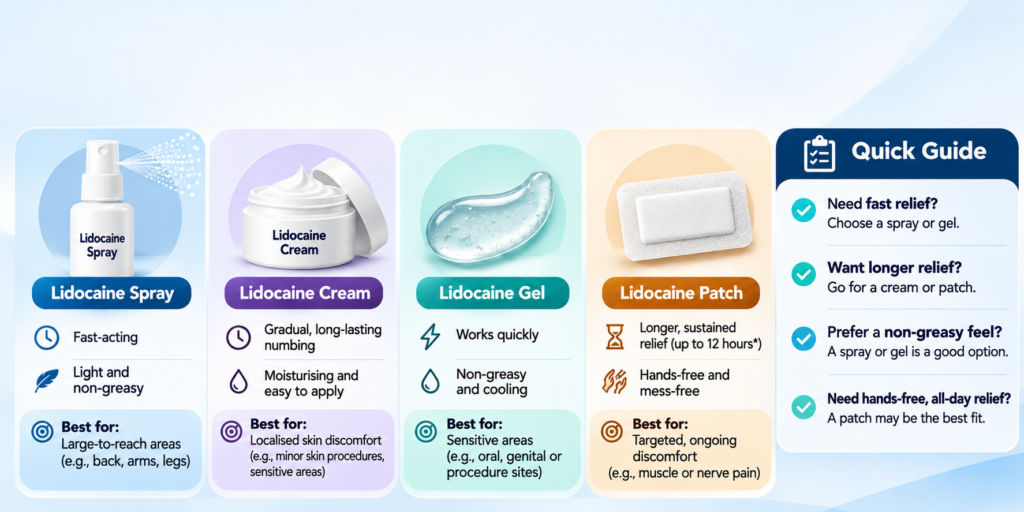
Lidocaine is one of the most widely used topical numbing agents in the world. It is also sold in four different forms: spray, cream, gel and patch. They contain the same type of active ingredient, but they differ in how fast they work, how long they last and where they can safely be used. Picking the wrong form is the most common reason people say a numbing product “didn’t work”.
This guide explains what each form is best for, how they compare, and the safety points that matter most.
What is lidocaine and how does it work?
Lidocaine is a local anaesthetic. It blocks sodium channels in nerve endings, which stops them from sending pain signals to the brain. It numbs the area where it is applied without making you drowsy or affecting the rest of your body, as long as it is used as directed.
Quick comparison: spray vs cream vs gel vs patch
| Form | Typical onset | Typical duration | Best for | Main limitation |
|---|---|---|---|---|
| Spray | Within minutes | Short | Small, quick-relief areas, minor procedures, premature ejaculation (specific products) | Short-lived; hard to control on large areas |
| Cream | About 30-60 minutes | Longer, especially under a dressing | Needle procedures, minor skin procedures, larger intact skin areas | Slow onset; needs planning ahead |
| Gel | Faster than cream on mucous membranes | Moderate | Mucosal or moist areas, minor procedures, products designed for specific sites | Can be runny on dry skin; check the label for where it is allowed |
| Patch | Gradual | Hours | Localised, ongoing pain such as a sore muscle or nerve pain area | Only covers the patch size; not for broken skin |
Onset and duration vary by brand and strength. Always follow the leaflet for your specific product.
Lidocaine cream: best for planned procedures
Lidocaine cream is what most people picture when they think of a “numbing cream”. It needs time to soak through the skin, so you apply it well before the procedure, not just before.
Commonly used for:
- Blood tests, injections and cannulation (including in children, under medical advice)
- Minor skin procedures
- Some cosmetic or laser treatments, as directed by the clinician
Emla 5% cream is the best-known example. It combines lidocaine 2.5% and prilocaine 2.5%. In Malaysia, Emla is supplied as a prescription medicine, so you need a doctor’s prescription to get it. On DoctorOnCall you can get a tele-consult first if you do not already have one.
Tip: Cream usually needs 30 to 60 minutes to work, sometimes longer under an occlusive dressing, but only if your doctor or the label says to use one.
Lidocaine gel: best for moist or sensitive areas
Gels spread easily and are often used on mucous membranes or in places where a cream would not stay put. Some gels are formulated for specific uses (for example, urinary or oral procedures), so never assume one gel can be used anywhere. Check the label for the approved site.
Commonly used for:
- Minor procedures where the product is designed for that area
- Short-term relief of minor surface pain or irritation, as directed on the label
Lidocaine spray: best for fast, targeted relief
Sprays work quickly and are convenient because there is no need to touch the area. That makes them useful for small areas that are sore or sensitive. The trade-off is that the numbness is usually shorter-lived, and overspray can reach areas you did not intend to treat.
Commonly used for:
- Small areas needing quick, short-term numbing
- Certain men’s health products designed to delay ejaculation (use only the product labelled for this purpose)
Do not spray near the eyes, and avoid inhaling the spray. Use it in a ventilated space.
Lidocaine patch: best for localised pain
A lidocaine patch sits on the skin and releases the medicine slowly. It is best for pain in a well-defined spot, such as a sore patch of muscle or an area of nerve pain, rather than for a quick numbing effect before a procedure.
Key points:
- Apply only to intact, clean, dry skin
- Follow the label on how long to wear it and how long to leave it off
- Do not combine with heat pads or electric blankets over the patch, as heat can increase absorption
So which should you choose?
- Needle or minor procedure that is booked in advance: cream (such as Emla, with a prescription)
- Quick relief on a small area: spray
- Moist or sensitive areas, or a site-specific product: gel, used only as the label allows
- Ongoing pain in one spot: patch
If you are unsure, ask your pharmacist or doctor. The right choice depends on the area, how long you need the effect, and your medical history.
Where should you not apply lidocaine?
As a general rule, avoid lidocaine on:
- Broken, raw or infected skin, unless the product is specifically designed for it and your doctor has told you to use it
- Eyes and the area around them
- Inside the ears if the eardrum may be damaged
- Large areas of skin or for longer than directed, because more gets absorbed into the bloodstream
- Under heat sources such as heating pads
Some groups need extra caution, and should speak to a doctor or pharmacist first:
- Babies and young children. Creams containing prilocaine (such as Emla) carry a risk of methaemoglobinaemia, which reduces the blood’s ability to carry oxygen.
- People with G6PD deficiency, which is relatively common in Malaysia.
- Pregnant or breastfeeding women
- People with heart or liver conditions, or those taking certain heart rhythm medicines
- Anyone allergic to amide-type local anaesthetics
Common side effects and when to get help
Mild skin redness, itching or a tingling sensation where the product was applied is common. Stop using it and seek medical help if you notice:
- Swelling, hives or difficulty breathing
- Dizziness, a very slow or irregular heartbeat
- Blue or grey lips or skin, or unusual tiredness and shortness of breath
- Severe pain, blistering or burning at the site
FAQ
What is lidocaine cream used for?
Lidocaine cream numbs the skin surface before needles, minor skin procedures and some cosmetic treatments. Some lower-strength products are used for minor skin discomfort, depending on the label.
How long does lidocaine cream take to work?
Most creams take around 30 to 60 minutes, sometimes longer. Patches and gels vary, and sprays act faster. Check your product’s leaflet.
Can I get lidocaine cream over the counter?
It depends on the product and strength. Emla 5% is a prescription medicine in Malaysia. Some lower-strength lidocaine products may be available through pharmacies. Ask the pharmacist, or consult a doctor online if you are unsure.
What is the difference between Emla cream and lidocaine cream?
Emla contains two anaesthetics, lidocaine 2.5% and prilocaine 2.5%. A plain lidocaine cream contains only lidocaine.
Is lidocaine gel the same as lidocaine cream?
Both contain lidocaine, but the base is different, and gels are often made for specific sites. Use each only as its label directs.
Can I use lidocaine every day?
Only as directed. Long-term or repeated use over large areas can raise absorption and side effects. If you need it regularly, see a doctor.