
Norcolut 5mg (Norethisterone): What It’s Used For, How to Take It & Side Effects
Introduction
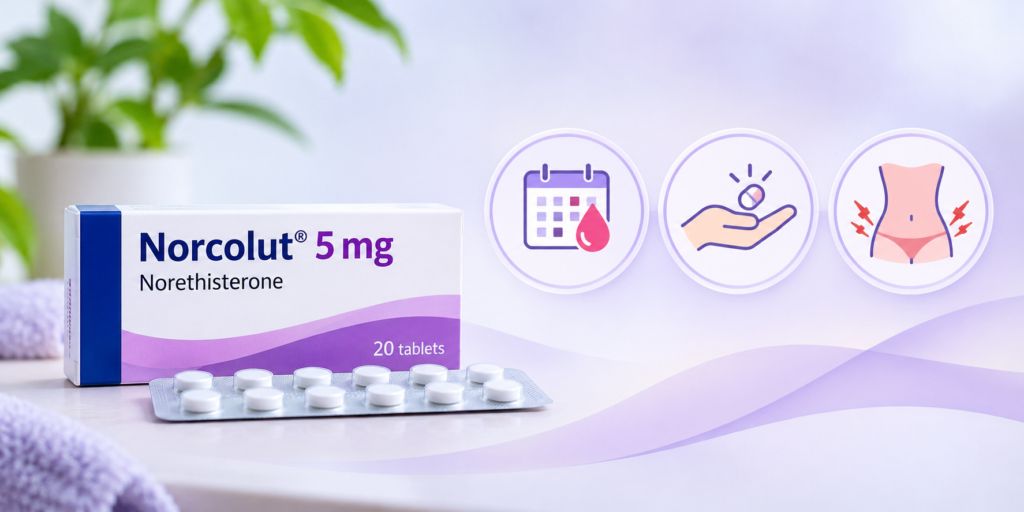
Quick answer: Norcolut 5mg is a prescription tablet containing norethisterone, a synthetic form of the hormone progesterone. Doctors prescribe it to stop heavy or irregular menstrual bleeding, to delay a period, and to treat conditions such as endometriosis. For heavy bleeding, the usual regimen is one 5mg tablet two to three times a day for about 10 days, and bleeding typically eases within 1 to 3 days.
If your doctor has just handed you a strip of Norcolut, you probably have questions. What exactly is it for? When should you take it? How soon will the bleeding stop, and what side effects should you watch for?
This guide answers each of those, in plain language. It covers what Norcolut treats, how it works, how to take it, how long it takes to work, its side effects, and who should avoid it. Always follow the dose your doctor prescribed; the regimens below are general information, not a substitute for medical advice.
What is Norcolut used for?
Norcolut is used to control the menstrual cycle and treat conditions driven by the lining of the womb (endometrium). Doctors commonly prescribe it for:
- Heavy or prolonged periods (menorrhagia): to stop an episode of heavy bleeding and, if needed, to prevent it from coming back.
- Irregular bleeding (dysfunctional uterine bleeding): bleeding between periods or an unpredictable cycle with no structural cause.
- Delaying a period: for travel, exams, a wedding, Hajj or Umrah, or sports events.
- Endometriosis: to suppress endometrial tissue growing outside the womb and reduce pain.
- Absent periods (amenorrhoea): sometimes used with oestrogen to bring on a withdrawal bleed.
- Premenstrual symptoms: in some cases, to ease cyclical symptoms such as breast tenderness and bloating.
Norcolut is not a contraceptive at these doses. If you need protection from pregnancy, use a barrier method such as condoms while taking it.
How does Norcolut work?
Norcolut works by keeping progesterone levels high, which holds the womb lining stable so it does not shed. A period normally starts when progesterone drops at the end of the cycle; norethisterone stops that drop from happening.
While you take it, bleeding slows and then stops. When you stop taking it, hormone levels fall and a period (a withdrawal bleed) usually follows within 2 to 3 days. This is expected and is a sign the medicine has done its job.
When and how should I take Norcolut?
Take Norcolut exactly as your doctor prescribed, at evenly spaced times each day, with or without food. Swallow the tablet whole with water. The table shows the regimens commonly used for each condition.
| Reason for use | Typical regimen | When to start |
|---|---|---|
| Stopping heavy bleeding | 5mg, 3 times a day, for 10 days | As soon as prescribed, during the bleed |
| Preventing heavy bleeding from returning | 5mg, 2 to 3 times a day | Days 19 to 26 of the cycle (day 1 = first day of the period) |
| Delaying a period | 5mg, 3 times a day | 3 days before the expected period; continue until you want it to start (usually no more than 10 to 14 days) |
| Endometriosis | 10mg a day, increased gradually to 20–25mg a day if needed | Day 5 of the cycle, taken for 4 to 6 months |
Tips for taking it
- Space doses evenly, for example 8am, 4pm and 12am, or with breakfast, lunch and dinner.
- Missed a dose? Take it as soon as you remember, unless the next dose is almost due. Do not double up. Missing doses can cause spotting or breakthrough bleeding.
- Delaying a period? Start early. Starting less than 3 days before your period is due makes it less likely to work.
- Do not stop early or extend the course without speaking to your doctor.
How long does Norcolut take to stop bleeding?
Most women notice bleeding slow within 24 to 48 hours of starting Norcolut, and it usually stops within 3 days. Keep taking the full course even once the bleeding has stopped.
After you finish the course, expect a withdrawal bleed 2 to 4 days later. It can be heavier than usual, but it should settle within a week.
See a doctor promptly if:
- Bleeding has not slowed after 3 days on Norcolut.
- You are soaking through a pad or tampon every hour for several hours.
- You feel dizzy, faint or short of breath, or have severe pelvic pain.
Heavy bleeding that keeps returning needs a proper check, as it can be caused by fibroids, polyps, thyroid problems or other conditions that need their own treatment.
What are the side effects of Norcolut?
Most side effects of Norcolut are mild and fade once the course ends. Not everyone gets them.
Common side effects
- Nausea or an upset stomach
- Headache
- Breast tenderness
- Bloating or fluid retention
- Mood changes or feeling low
- Spotting or light breakthrough bleeding
- Changes in appetite or weight
- Acne or oily skin
Rare but serious: stop taking it and get urgent medical help if you have:
- Pain, swelling or warmth in one leg (possible blood clot)
- Sudden chest pain or breathlessness
- A sudden severe headache, vision changes, or weakness or numbness on one side
- Yellowing of the skin or eyes, or severe upper abdominal pain (possible liver problem)
- A severe allergic reaction, such as swelling of the face or lips, or difficulty breathing
Who should not take Norcolut?
Norcolut is not suitable for everyone, so tell your doctor about your full medical history before starting. You should not take it if you:
- Are pregnant or think you might be
- Have had a blood clot (in the leg, lung, eye or brain), a stroke or a heart attack
- Have liver disease or a liver tumour
- Have unexplained vaginal bleeding that has not been checked by a doctor
- Have, or have had, breast cancer or another hormone-sensitive cancer
- Have porphyria
- Are allergic to norethisterone or any ingredient in the tablet
Use with caution and tell your doctor if you have: high blood pressure, diabetes, migraine, epilepsy, asthma, kidney or heart problems, depression, or a family history of blood clots. Also mention upcoming surgery or long periods of immobility, such as a long-haul flight, as these raise the clot risk.
Medicines that can interact with Norcolut
Some medicines speed up how the body breaks down norethisterone and can make it less effective. These include:
- Epilepsy medicines such as carbamazepine, phenytoin and phenobarbital
- Rifampicin and rifabutin (for tuberculosis)
- Some HIV medicines
- St John’s wort (a herbal remedy)
Norcolut can also affect ciclosporin levels and blood sugar control in diabetes. Tell your doctor or pharmacist about every medicine, supplement and herbal product you take.
Frequently asked questions
What is Norcolut used for?
Norcolut (norethisterone 5mg) is used to stop heavy or irregular menstrual bleeding, delay a period, and treat endometriosis and some other menstrual conditions.
How long does Norcolut take to stop bleeding?
Bleeding usually slows within 24 to 48 hours and stops within about 3 days. See a doctor if it has not eased after 3 days.
When should I take Norcolut?
Take it at evenly spaced times each day, as prescribed. To delay a period, start 3 days before it is due.
Will I get my period after stopping Norcolut?
Yes. A withdrawal bleed usually starts 2 to 4 days after the last tablet.
Can Norcolut prevent pregnancy?
No. At these doses Norcolut is not a reliable contraceptive. Use condoms if you need protection.
Can I take Norcolut to delay my period for Umrah or Hajj?
Yes, this is a common use. Start 3 days before your expected period and speak to a doctor first, especially if you will be on a long flight.
Does Norcolut cause weight gain?
Some people notice bloating or small weight changes, mostly from fluid retention. This usually settles after the course ends.
Do I need a prescription for Norcolut in Malaysia?
Yes. Norcolut is a prescription medicine. You can consult a doctor online through DoctorOnCall to get a prescription if it is suitable for you.