
Tretinoin Cream: Uses, Strengths (0.025%, 0.05%, 0.1%) & How to Use It
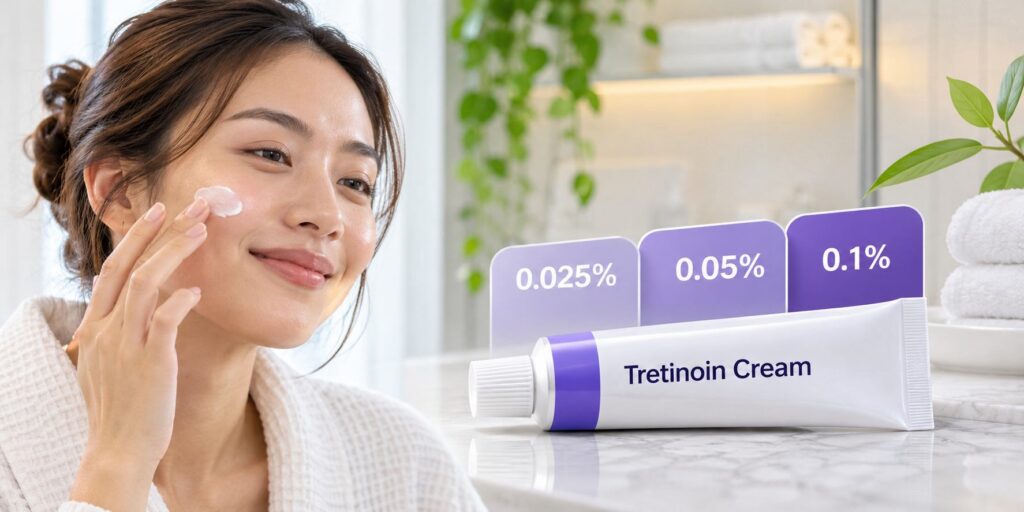
Tretinoin cream is a prescription retinoid that treats acne and sun-damaged skin by speeding up skin cell turnover. It comes in three common strengths — 0.025%, 0.05% and 0.1% — and most people should start with the lowest. Used correctly (a pea-sized amount at night, introduced slowly, with daily sunscreen), it is one of the most studied skin treatments available.
This guide covers what tretinoin treats, how to choose a strength, how to apply it, what side effects to expect, and how to get genuine tretinoin safely in Malaysia.
What is tretinoin cream?
Tretinoin (all-trans retinoic acid) is a form of vitamin A applied to the skin. Unlike retinol, which the skin must convert before it works, tretinoin is already in its active form. That makes it stronger and faster-acting — and also more irritating.
It works in three ways:
- Unclogs pores. It loosens the dead cells that block pores and form blackheads and whiteheads.
- Speeds up cell turnover. Fresh skin cells reach the surface faster, which evens out texture and tone.
- Supports collagen. With months of use, it helps thicken the deeper skin layer, softening fine lines.
Tretinoin vs retinol
| Tretinoin | Retinol | |
|---|---|---|
| Form | Active retinoic acid | Needs conversion in skin |
| Strength | Strong | Mild |
| Availability in Malaysia | Prescription only | Over the counter in cosmetics |
| Irritation | More likely | Less likely |
| Best for | Acne, visible sun damage | Early ageing, sensitive skin |
What is tretinoin cream used for?
Tretinoin cream is mainly used for acne and sun-damaged (photoaged) skin. Doctors may also prescribe it for related concerns.
- Acne. Blackheads, whiteheads and inflamed pimples. It is often paired with an antibiotic or benzoyl peroxide for stronger results.
- Fine lines and rough texture. From long-term sun exposure.
- Dark spots and uneven tone. Including sun spots and marks left after acne.
- Melasma. Usually as part of a combination cream prescribed by a doctor.
Tretinoin does not treat active rosacea, eczema or fungal acne, and can worsen them. If you are unsure what is causing your skin concern, speak to a doctor first.
Tretinoin strengths: 0.025% vs 0.05% vs 0.1%
Start with 0.025% unless your doctor says otherwise. Higher strengths are not always better: they work slightly faster but cause more irritation, which makes many people stop early.
| Strength | Who it suits | Irritation risk | Typical use |
|---|---|---|---|
| 0.025% | First-time users, sensitive or dry skin | Lowest | Mild acne, starting a routine |
| 0.05% | Users who tolerate 0.025% well after 2–3 months | Moderate | Persistent acne, early sun damage |
| 0.1% | Experienced users with oily, resilient skin | Highest | Stubborn acne, marked sun damage |
Most people step up only after their skin has settled on the current strength. Some never need to go higher — 0.025% used consistently still gives results.
How to use tretinoin cream
Apply a pea-sized amount to the whole face at night, two to three nights a week at first, and build up slowly.
- Cleanse gently with a mild, non-scrubbing cleanser. Pat dry.
- Wait until skin is fully dry — about 20 minutes. Damp skin absorbs more and stings more.
- Use a pea-sized amount for the whole face. Dot it on the forehead, cheeks and chin, then spread thinly.
- Avoid sensitive areas: eyes, corners of the nose and mouth, and lips.
- Moisturise after applying, or before if your skin is very dry (the “buffering” method).
- Apply sunscreen every morning, SPF 30 or higher, even on cloudy days or indoors near windows.
A simple starting schedule
| Weeks | How often |
|---|---|
| 1–2 | 2 nights a week |
| 3–4 | Every other night |
| 5 onwards | Nightly, if skin is comfortable |
If your skin becomes very red or sore, drop back a step for a week.
What to avoid while using tretinoin
- Scrubs, peeling solutions, and AHA/BHA exfoliants on the same night
- Benzoyl peroxide at the same time (use it in the morning instead, if prescribed)
- Waxing, threading or laser on treated areas
- Long sun exposure without protection
How long until it works?
Expect 8–12 weeks for acne and 3–6 months for fine lines and dark spots. Acne may look worse in the first 2–6 weeks (“purging”) as clogged pores clear. Keep going unless irritation is severe.
Side effects and downsides
The main downside of tretinoin is irritation in the first few weeks. Most side effects are mild and ease as the skin adjusts.
Common:
- Dryness, flaking and peeling
- Redness and a warm or stinging feeling
- Temporary acne flare (purging)
- Greater sensitivity to sun
Stop using and see a doctor if you have:
- Blistering, crusting or swelling
- Severe burning that does not settle
- Signs of an allergic reaction
Other practical downsides: results take months, and skipping sunscreen can undo progress or cause dark patches.
Who should not use tretinoin
Do not use tretinoin if you are pregnant, trying to conceive or breastfeeding, unless a doctor specifically advises it.
Also speak to a doctor first if you:
- Have eczema, rosacea or very sensitive skin
- Have sunburned, broken or freshly treated skin (after a peel or laser)
- Are already using other prescription skin treatments
- Are allergic to any ingredient in the cream
Where to buy tretinoin cream in Malaysia
Tretinoin is a prescription medicine in Malaysia, so you need a doctor’s prescription to buy it from a pharmacy. It is not legally sold over the counter.
Why to avoid unregistered tretinoin online
Many tretinoin creams sold through online marketplaces are imported products not registered with the National Pharmaceutical Regulatory Agency (NPRA). These may:
- Contain the wrong strength, or no tretinoin at all
- Be mixed with undeclared steroids or mercury, which can damage skin
- Be stored poorly in transit, reducing effectiveness
Registered products carry a MAL number on the pack, which you can check on the NPRA product search.
How to get tretinoin through DoctorOnCall
- Consult a doctor online — describe your skin concern and get advice on whether tretinoin suits you.
- Get a prescription for the right strength, or upload an existing one.
- Order genuine, registered tretinoin from DoctorOnCall’s pharmacy, delivered to your door.
Our pharmacists can also answer questions about how to start, and what to pair it with.
Frequently asked questions
What is tretinoin cream used for?
Tretinoin cream is used to treat acne and to improve sun-damaged skin, including fine lines, rough texture and dark spots. Doctors may also prescribe it as part of treatment for melasma.
Can I use tretinoin every day?
Yes, once your skin has adjusted. Most people start two to three nights a week and work up to nightly use over about a month. Apply it at night only, and use sunscreen every morning.
Can I buy tretinoin over the counter in Malaysia?
No. Tretinoin is a prescription medicine in Malaysia. You can get a prescription through an online doctor consultation, then order registered tretinoin from a licensed pharmacy such as DoctorOnCall.
What is the downside of tretinoin?
The main downside is irritation — dryness, peeling and redness — in the first few weeks, plus a possible temporary acne flare. It also makes skin more sensitive to sun, and results take two to six months.
Which tretinoin strength should I start with?
Most people should start with 0.025%. Move up to 0.05% or 0.1% only if your doctor advises it and your skin tolerates the lower strength well.
Is tretinoin the same as retinol?
No. Both are vitamin A derivatives, but tretinoin is the active form and much stronger. Retinol is sold in cosmetics without a prescription and works more slowly.