
What Is Lidocaine? Uses, Safety & Is Lidocaine the Same as Lignocaine?
What is lidocaine?
Lidocaine is a local anaesthetic. That means it temporarily blocks pain signals in the area where it is applied or injected, without putting you to sleep. It is also used, in a hospital setting, as a medicine to treat certain abnormal heart rhythms.
It has been in clinical use since the 1940s and is on the World Health Organization’s Model List of Essential Medicines, which reflects how established and widely relied upon it is.
Is lidocaine the same as lignocaine?
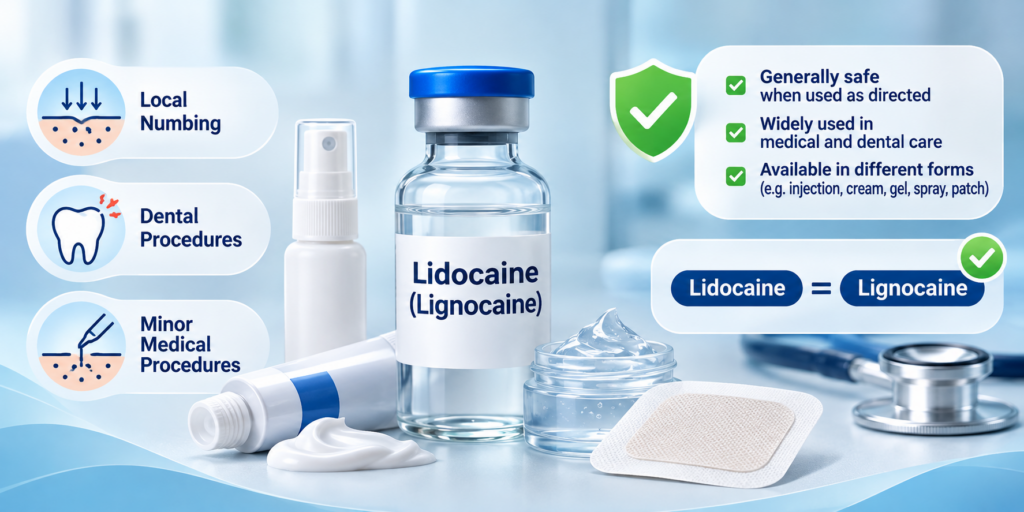
Yes. Lidocaine and lignocaine are two names for exactly the same active ingredient, with the same chemical structure and the same effects.
The difference is naming convention:
- Lidocaine is the name used in the United States and in the international non-proprietary name (INN) system.
- Lignocaine is the older British-style name still used in the UK’s historical naming, Australia, New Zealand, and many Commonwealth-influenced markets, including Malaysia on many product labels and in clinical settings.
So if a pharmacist, a dentist or a product label says lignocaine, and an article online says lidocaine, they are talking about the same medicine. Some products also label the strength as “lidocaine hydrochloride” or “lignocaine HCl”, which is simply the salt form of the same drug.
How does lidocaine work?
Nerves send pain signals by moving electrical impulses along their surface, through tiny channels called sodium channels. Lidocaine blocks those channels in the nerves near where it is applied. With the signal blocked, the pain message does not reach the brain, and the area feels numb.
The effect is local and temporary. Onset and duration depend on the form used, the strength, and the body area. Topical products usually take a few minutes to start working, and the numbness wears off after a while once the medicine is cleared from the area.
What is lidocaine used for?
Common uses include:
- Dental work: injections to numb teeth and gums, and gels or sprays applied before an injection.
- Minor procedures and wound care: numbing the skin before stitches, small skin procedures, or removing a splinter.
- Needle procedures: creams or patches applied to the skin beforehand, for example before blood tests or vaccinations, so the needle is less painful.
- Muscle and nerve-related pain relief: certain patches are used for localised nerve pain such as pain that lingers after shingles.
- Minor skin irritation: some creams and sprays are used for itching, minor burns, insect bites or sunburn discomfort.
- Throat and airway procedures: sprays or gels used by clinicians to numb the area before a procedure.
- Heart rhythm treatment: given by injection in hospital settings for certain dangerous arrhythmias. This is a clinical use only.
Forms of lidocaine you may come across
| Form | Typical use |
|---|---|
| Cream or ointment | Numbing intact skin, minor itching or irritation |
| Gel | Skin, and some products for use inside the mouth or other mucous surfaces as directed |
| Spray | Quick-acting surface numbing, minor skin discomfort |
| Patch | Localised pain relief on a defined area of skin |
| Injection | Dental and medical procedures, given by a trained professional |
| Combination creams | Some numbing creams combine lidocaine with another anaesthetic such as prilocaine |
Product availability, strengths and whether a product is sold over the counter, behind the pharmacy counter or by prescription vary. Always check what the product is and who it is meant for before you buy.
Is lidocaine safe?
When used as directed, lidocaine has a long record of safe use. Most side effects of topical products are mild and local. The risks rise when too much is used, when it is applied to large areas or broken skin, or when it is combined with heat or occlusion that increases absorption.
Common, usually mild side effects
- Redness, itching or mild irritation where it was applied
- Temporary skin paleness or swelling at the site
- Numbness that lasts a little longer than expected
Signs to take seriously
Stop using the product and seek medical help promptly if you notice:
- Dizziness, lightheadedness or confusion
- Ringing in the ears, blurred vision or a metallic taste
- Numbness or tingling around the mouth
- Slow or irregular heartbeat, or breathing difficulty
- Blue or grey-tinged lips or skin, or unusual tiredness and breathlessness, which can point to a rare blood condition called methaemoglobinaemia
- Signs of an allergic reaction: rash, swelling of the face or throat, trouble breathing
If you suspect a severe reaction, treat it as an emergency and get immediate medical care.
Safety tips for using lidocaine products
- Read the label and leaflet. Strength, age limits, how much to use and how long to leave it on differ by product.
- Use the smallest amount and the smallest area that works. Do not apply more than directed.
- Apply to intact skin only, unless the product is specifically intended for broken skin and a professional has told you to use it that way.
- Avoid heat and tight coverings such as heating pads, hot water bottles or tight bandages over the treated area, unless advised otherwise, because they can increase absorption.
- Be careful around the mouth and throat. Numbing the mouth or throat can affect swallowing and the gag reflex. Avoid eating or drinking hot items until feeling returns, and take care not to bite your cheek or tongue.
- Keep it away from eyes and out of reach of children.
- Do not use more than one lidocaine product at a time without checking with a pharmacist, as the amounts add up.
- Wash your hands after applying, unless your hands are the treated area.
Who should speak to a doctor or pharmacist first?
Get advice before using lidocaine if:
- You are pregnant or breastfeeding
- You are treating a baby or young child. Products suitable for adults are not always suitable for children, and mouth gels in particular need professional guidance for young children.
- You have liver disease, heart conditions or a history of abnormal heart rhythms
- You have had an allergic reaction to local anaesthetics before
- You take other medicines, including heart rhythm medicines or other numbing agents
- You plan to use it over a large area of skin or for a long time
Buying lidocaine products in Malaysia
A few practical points for Malaysian readers:
- Look for both names. Packaging, leaflets and your pharmacist may use lignocaine, lidocaine or lignocaine hydrochloride interchangeably.
- Check that the product is registered. Legitimate medicines sold in Malaysia carry an MAL registration number issued through the National Pharmaceutical Regulatory Agency (NPRA). You can verify a product through the NPRA’s product search.
- Buy from licensed pharmacies and reputable sellers. Numbing creams sold through unregulated channels may be unregistered, mislabelled or much stronger than stated.
- Ask your pharmacist. If you are unsure which strength or form suits your situation, a pharmacist can help you choose and explain how to use it correctly.
When to see a doctor
See a healthcare professional if:
- Pain keeps returning or is getting worse, since numbing it will not treat the cause
- The skin looks infected, swollen, blistered or is not healing
- You have used lidocaine as directed and it is not helping
- You experience any of the warning signs listed above
Frequently asked questions
Is lidocaine the same as lignocaine?
Yes. They are two names for the same medicine. Lidocaine is the internationally common name, and lignocaine is the older naming still used on many labels in Malaysia and other Commonwealth countries.
Is lidocaine a steroid or a painkiller?
Neither in the usual sense. It is a local anaesthetic. It numbs a specific area by blocking nerve signals rather than reducing inflammation like a steroid or acting on the whole body like many oral painkillers.
How long does lidocaine take to work?
Topical products generally start working within minutes to around an hour, depending on the form and strength. Check your product’s leaflet for the recommended waiting time and how long the effect lasts.
Can I use lidocaine cream every day?
Some products are intended only for occasional use before a procedure, while patches are designed for specific durations on and off. Follow the leaflet, and ask your doctor or pharmacist before using any product regularly.
Can lidocaine be used on broken skin?
Only if the product is specifically designed for it. Applying lidocaine to broken or irritated skin, or over large areas, increases absorption and the risk of side effects.
Is lidocaine safe during pregnancy?
This depends on the form, dose and situation. Always check with your doctor or pharmacist before using it while pregnant or breastfeeding.
Can I be allergic to lidocaine?
True allergy to lidocaine is uncommon, but irritation and, rarely, allergic reactions can occur. Stop use and seek help if you develop swelling, hives or difficulty breathing.
Does lidocaine make you sleepy?
Local use does not normally cause drowsiness. If you feel unusually drowsy, dizzy or confused after using it, stop and get medical advice, as this may be a sign of too much being absorbed.
The bottom line
Lidocaine, also called lignocaine, is a well-established local anaesthetic used to numb skin, mouth and tissues for procedures and for some kinds of localised pain. It is generally safe when you follow the directions, use only what you need and avoid broken skin, heat and large treatment areas. If you are unsure which product to use, or you are treating a child, are pregnant, or have a heart or liver condition, speak with a pharmacist or doctor first.