What Does Azelaic Acid Do? Benefits for Acne, Rosacea & Dark Spots (and How to Use It)
Introduction
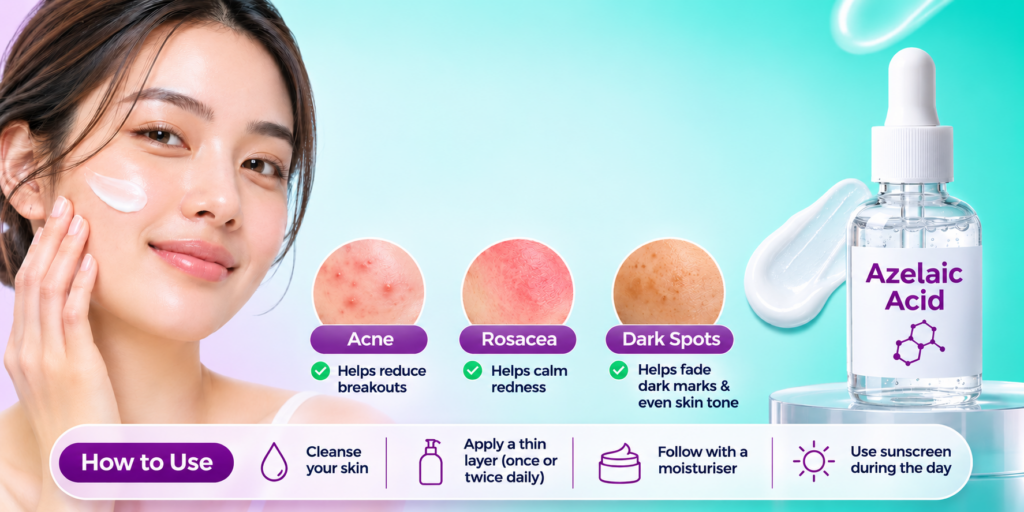
Most skincare actives do one job. Azelaic acid does three: it clears acne, calms rosacea redness and fades dark spots, and it does so gently enough for sensitive skin.
So what does azelaic acid do, exactly? In short, it kills acne-causing bacteria, keeps pores from clogging, reduces inflammation and slows excess pigment production. That combination is why dermatologists reach for it when skin is breaking out, flushing and marking up all at once.
This guide covers how azelaic acid works, its proven benefits, what to expect week by week, how to add it to your routine, its side effects, and which azelaic acid product suits your skin.
What is azelaic acid?
Azelaic acid is a naturally occurring dicarboxylic acid found in grains such as wheat, barley and rye. It is also produced by Malassezia, a yeast that lives on normal skin. The versions used in skincare and medicine are made in a lab for purity and consistent strength.
It comes in two main strengths:
- Medical-strength (15–20%) — creams and gels such as Skinoren 20% Cream, used to treat acne, and 15% gels used for rosacea.
- Cosmetic-strength (around 10% or less) — serums and suspensions sold for redness, texture and uneven tone.
How azelaic acid works on skin
Azelaic acid targets several causes of breakouts and discolouration at once:
- Antibacterial — it reduces Cutibacterium acnes (formerly Propionibacterium acnes), the bacteria linked to inflamed acne, without the resistance risk of topical antibiotics.
- Unclogs pores — it normalises how skin cells shed inside the follicle, so fewer blackheads and whiteheads form.
- Anti-inflammatory — it calms the redness, bumps and swelling seen in acne and rosacea.
- Brightening — it slows tyrosinase, the enzyme that drives melanin production, mainly in overactive pigment cells. That is why it fades dark marks without lightening normal skin tone.
Azelaic acid benefits: what it treats
1. Azelaic acid for acne
Azelaic acid 20% is an established topical treatment for mild to moderate acne. It works on both types of spots: inflamed papules and pustules, and non-inflamed blackheads and whiteheads.
It is a good fit when:
- Benzoyl peroxide or retinoids have been too harsh for your skin
- You want to avoid long-term topical antibiotics
- Your acne leaves dark marks behind, since azelaic acid treats the spot and the mark together
2. Azelaic acid for rosacea
For papulopustular rosacea (the type with red bumps and pus-filled spots), azelaic acid 15% gel is a recognised first-line treatment. It reduces the bumps, lesions and background redness by calming inflammation in the skin.
It does not remove visible broken blood vessels, and flushing triggers such as heat, spicy food and alcohol still need managing alongside treatment.
3. Azelaic acid for dark spots and melasma
Azelaic acid fades hyperpigmentation by slowing melanin production in overactive pigment cells. Doctors use it for:
- Post-inflammatory hyperpigmentation (PIH) — the brown or dark marks left after acne, common in Asian and darker skin tones
- Melasma — patchy brown pigmentation on the cheeks, forehead and upper lip, often linked to hormones and sun exposure
- Uneven skin tone and sun spots
Because it targets overactive pigment cells rather than all of them, it is often chosen as an alternative to hydroquinone for long-term use. Daily sunscreen is essential, or the pigment will keep coming back.
4. Other benefits
- Smoother texture — regular use refines rough, bumpy skin by keeping pores clear.
- Suitable for sensitive skin — it is generally better tolerated than retinoids and strong exfoliating acids.
- Used in pregnancy — it is one of the acne treatments doctors commonly consider during pregnancy and breastfeeding, but always check with your doctor first.
Azelaic acid before and after: when will you see results?
Azelaic acid works steadily, not overnight. Most people notice a difference in acne within about 4 weeks, with fuller results after 2–3 months of twice-daily use.
| Timeframe | What to expect |
|---|---|
| Weeks 1–2 | Mild tingling or itching as skin adjusts; usually settles on its own |
| Weeks 4–6 | Fewer new breakouts, less redness and fewer rosacea bumps |
| Weeks 8–12 | Clearer skin overall; dark marks start to look lighter |
| 3–6 months | Most visible fading of melasma and post-acne marks, with daily sunscreen |
Results vary with skin type, severity and how consistently you apply it. If you see no improvement after about 3 months, speak to a doctor about adjusting your treatment.
Image note: add a before-and-after illustration or a licensed patient image here, with alt text “azelaic acid before and after acne results”.
How to use azelaic acid
- Cleanse with a gentle, non-foaming cleanser and pat skin completely dry.
- Apply a thin layer to the whole affected area, not just individual spots, and rub in gently. A pea-sized amount covers the face.
- Use it twice a day, morning and evening, or as directed by your doctor. Sensitive skin can start once a day and build up.
- Moisturise after it has absorbed.
- Wear SPF 30 or higher every morning, especially if you are treating dark spots.
- Wash your hands after applying, and keep it away from your eyes, mouth and the inside of your nose.
Can you use azelaic acid with other actives?
| Combination | Verdict |
|---|---|
| Azelaic acid + niacinamide | Works well together for redness and pigmentation |
| Azelaic acid + hyaluronic acid or ceramides | Good pairing; hydration helps reduce irritation |
| Azelaic acid + retinoids (e.g. tretinoin, adapalene) | Can be combined, often at different times of day; introduce one at a time |
| Azelaic acid + benzoyl peroxide | Sometimes prescribed together; may increase dryness |
| Azelaic acid + AHAs/BHAs or vitamin C | Use on alternate nights or different times of day to avoid irritation |
If you are already on prescription acne treatment, ask your doctor before adding azelaic acid.
Azelaic acid side effects
Azelaic acid is well tolerated by most people. The common side effects are mild and usually fade within the first few weeks:
- Burning, stinging or tingling when applied
- Itching
- Dryness, flaking or mild redness
Less commonly, some people notice lighter patches of skin, which has been reported mainly in darker skin tones. Stop using it and see a doctor if you have severe irritation, swelling, blistering or signs of an allergic reaction.
Who should check with a doctor first
- Pregnant or breastfeeding women
- People with very sensitive skin, eczema or a history of reactions to skincare
- Anyone with asthma, as worsening has been reported rarely
- Anyone already using prescription acne or rosacea treatments
Which azelaic acid product should you use?
The right product depends on what you are treating and how severe it is. Medical-strength azelaic acid gives the strongest, best-studied results; lower-strength serums suit maintenance and mild concerns.
| Your concern | Recommended option |
|---|---|
| Mild to moderate acne with post-acne dark marks | Skinoren 20% cream |
| Rosacea bumps and redness | 15% azelaic acid gel, after a doctor’s consultation |
| Melasma or stubborn pigmentation | 15–20% azelaic acid with daily SPF 50; see a doctor if patches persist |
| Mild redness, texture or uneven tone | Cosmetic azelaic acid serum (around 10%) |
Skinoren 20% cream
Skinoren is one of the best-known medical azelaic acid creams. It contains 20% azelaic acid to reduce acne-causing bacteria, unclog pores and fade the dark marks breakouts leave behind. It is suitable for long-term use and gentle enough for skin that cannot tolerate stronger acne treatments.
Not sure which one suits your skin?
Acne, rosacea and melasma can look alike, and each needs a different plan. Speak to a DoctorOnCall pharmacist or doctor online for advice on the right product and strength for your skin.
Frequently asked questions
Can I use azelaic acid every day?
Yes. Azelaic acid is designed for daily use, usually twice a day. If your skin is sensitive, start once a day and increase as it adjusts.
Is azelaic acid better than niacinamide?
They do different jobs and work well together. Azelaic acid treats acne, rosacea and pigmentation more directly, while niacinamide supports the skin barrier and reduces redness and oil.
Does azelaic acid help with acne scars?
It fades flat dark or red marks left by acne. It does not fill in pitted or indented scars, which need in-clinic treatments such as microneedling or lasers.
Should I use azelaic acid in the morning or at night?
Both are fine. Most treatment plans use it twice daily, and it does not make skin more sensitive to the sun. Always follow with sunscreen in the morning.
Is azelaic acid safe during pregnancy?
Azelaic acid is one of the acne treatments doctors commonly consider during pregnancy and breastfeeding. Speak to your doctor before starting any treatment while pregnant.
Does azelaic acid cause purging?
Purging is uncommon with azelaic acid. Mild stinging or itching in the first weeks is more typical. Breakouts that keep getting worse should be checked by a doctor.